The Accuser
Why Is It The Worst Thing You Can Do?

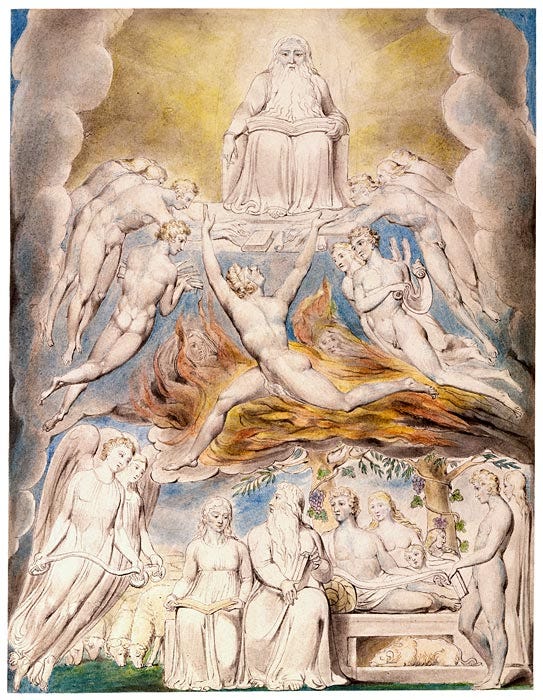
The word Satan in Hebrew means Adversary, Accuser or Opponent.
The word Devil comes from the Greek Diablos, which means Slanderer or Accuser.
… Why?
Of all the words used to describe the Devil — the most evil being in existence, the embodiment of evil, the creature whose entire existence is dedicated to destroying yours —
Why did the Hebrews and Greeks who wrote our sacred books choose the word Accuser?
I mean. Sure. Accusing isn’t a very nice thing to do.
No one likes to be accused.
But, if I were to list all the worst things that a person can do —
Murder, rape, theft, torture, assault, lying, adultery —
There is a whole list of things that I would put down before I ever got to the word Accuser. I’m not sure it would even be in the Top 100.
And can’t it be good to accuse others? What if someone does something bad? Are you supposed to just let them walk around free? If there is a murderer who is hiding out in a community, and someone tells the authorities, isn’t that person getting involved in accusation? Are we to believe that action is wrong?
It’s confusing at first, but I think there is a crucial insight into how the Devil (and evil as a whole) works that lies in the word: Accuser.
(Weirdly, the word “evil” and “devil” are not etymologically linked at all. “Evil” comes from an Old English yfel, which has its roots in the Germanic word übel. This is one of those beautiful coincidences that, if you already believed in the Creator, adds to your appreciation of the world that he created).
On Babies And Bathwater

For the answer, I think it’s important to reference the first time that the Devil makes his appearance in the Bible, as the serpent in the Garden of Eden.
Genesis 3:1-6
Now the snake was the most cunning of all the wild animals that the Lord God had made. He asked the woman, “Did God really say, ‘You shall not eat from any of the trees in the garden’?” The woman answered the snake: “We may eat of the fruit of the trees in the garden; it is only about the fruit of the tree in the middle of the garden that God said, ‘You shall not eat it or even touch it, or else you will die.’” But the snake said to the woman: “You certainly will not die! God knows well that when you eat of it your eyes will be opened and you will be like gods, who know good and evil.” The woman saw that the tree was good for food and pleasing to the eyes, and the tree was desirable for gaining wisdom. So she took some of its fruit and ate it; and she also gave some to her husband, who was with her, and he ate it.
Look at the words that the Serpent uses to convince Eve to eat the apple.
Eve says, “God told us that if we eat this fruit, then we will die.”
And Satan’s response? “Die? From this little apple? No, God is lying to you. In fact, he is doing it because he is scared of you and what you can become if you have the same knowledge as him.” He’s accusing God of lying and of paranoia.
And what happens? Eve eats the apple, they get banished from the Garden of Eden and — most importantly — humans become mortal, and, yes, now, are subject to death. God and Eve were right, the Devil was wrong. But the Devil doesn’t really care about being right. He doesn’t mind lying. He won. Man fell.
There are a lot of other famous instances of Satan in the Bible — during the story of Job, when he accuses Joshua before God — all of which are accusations, obviously.
But there is another accusation that I want to discuss
It isn’t as explicit in the Bible, so I want to give my standard warning about committing accidental heresy. This Substack isn’t religious text or teaching. I’m no authority. And always defer to the official doctrine of the Catholic Church over whatever BS I’m chewing on.
Anyway, let me cook for a second.
There’s this story that shows up in three books of the Bible that, to be honest, I don’t fully understand why they include it.
Jesus doesn’t come across well in this story. At least in my opinion. I don’t know, maybe I’m blaspheming here, but… you read it.
I’ll start out with the version in the Book of Matthew. 26:6-13
Now when Jesus was in Bethany in the house of Simon the leper, a woman came up to him with an alabaster jar of costly perfumed oil, and poured it on his head while he was reclining at table. When the disciples saw this, they were indignant and said, “Why this waste? It could have been sold for much, and the money given to the poor.” Since Jesus knew this, he said to them, “Why do you make trouble for the woman? She has done a good thing for me. The poor you will always have with you; but you will not always have me. In pouring this perfumed oil upon my body, she did it to prepare me for burial. Amen, I say to you, wherever this gospel is proclaimed in the whole world, what she has done will be spoken of, in memory of her.”
Okay. I get that you’re the son of God.
But… this seems a little self-indulgent doesn’t it? What’s to stop any rich person from saying, “yes, I know I should be giving to the poor, but… the poor we will always have with us. I won’t always have this yacht in Monaco?”
What’s so striking about this story, for me, is the lack of hypocrisy Jesus had in the rest of the Bible. It wasn’t like he was asking people to clothe him in silk and diamonds, while the poor were starving. He was walking around as a pauper, healing and feeding — and then gets tortured to death.
So, my question is: even if this happened. Why include this in the Bible? I’m sure there were tons of things that Jesus did that didn’t get included. Why would people who are trying to make Jesus seem as good as they possible include this over those other stories. Why not pack one more story of him healing a sick woman? Or a leper? Or a child?
Well, look at what happens right after.
Literally the next verses.
Matthew 26:14-16:
Then one of the Twelve, who was called Judas Iscariot, went to the chief priests and said, “What are you willing to give me if I hand him over to you?” They paid him thirty pieces of silver, and from that time on he looked for an opportunity to hand him over.
Jesus committed this act of seeming hypocrisy, and then right after, Judas goes to turn him in to the Pharisees.
This causation gets a little stronger when you read it told in the Gospel of John (12:3-8)
Mary took a liter of costly perfumed oil made from genuine aromatic nard and anointed the feet of Jesus and dried them with her hair; the house was filled with the fragrance of the oil. Then Judas the Iscariot, one [of] his disciples, and the one who would betray him, said, “Why was this oil not sold for three hundred days’ wages and given to the poor?” He said this not because he cared about the poor but because he was a thief and held the money bag and used to steal the contributions. So Jesus said, “Leave her alone. Let her keep this for the day of my burial. You always have the poor with you, but you do not always have me.”
It wasn’t just any disciple that complained about Jesus’ use of the perfume.
It was Judas Iscariot, the man who would betray him.
Luke (22:3-5) is pretty explicit about how he came into that decision:
Then Satan entered into Judas, the one surnamed Iscariot, who was counted among the Twelve, and he went to the chief priests and temple guards to discuss a plan for handing him over to them. They were pleased and agreed to pay him money.
So, what do we have here?
Judas is a hypocrite and a thief.
He notices a situation of apparent hypocrisy by Jesus.
He calls him out on that hypocrisy.
Jesus recognizes what is happening and tries to give him a lesson.
Instead, I can imagine that Satan approaches Judas after and says, “what a hypocrite Jesus is. He spends all this time talking about giving to the poor, and look. He uses up all this expensive perfume that could have been sold for three hundred days wages. And how much did you steal? It couldn’t have been that much. HE is the hypocrite. Not you. If everyone is looking out for themselves, then why not you? Why don’t you deserve to have your own plot of land?”
And that’s what he does. He gets the silver.
In Matthew, he feels so much guilt that he hangs himself.
In Acts 1:17-19
He was numbered among us and was allotted a share in this ministry. He bought a parcel of land with the wages of his iniquity, and falling headlong, he burst open in the middle, and all his insides spilled out. This became known to everyone who lived in Jerusalem, so that the parcel of land was called in their language ‘Akeldama,’ that is, Field of Blood.
That’s how the Devil operates.
And this is the key insight that the Greeks and the Hebrews had about the way that the Devil (and evil) works.
All evil begins with an accusation.
Hypocrisy
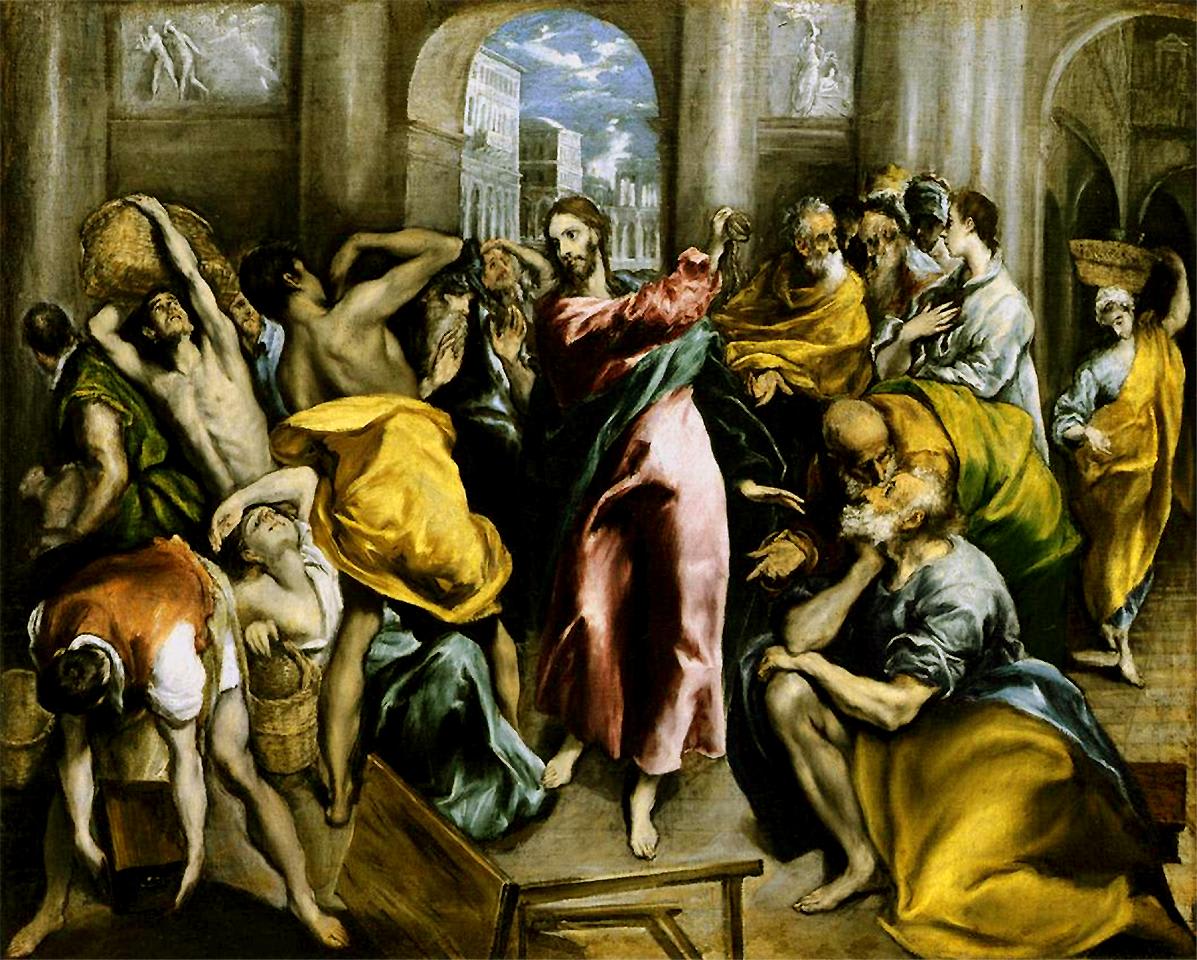
There’s a quote by Russian author Alexandr Solzhenitsyn that I really like, from Gulag Archipelago:
The line separating good and evil passes not through states, nor between classes, nor between political parties either -- but right through every human heart -- and through all human hearts. This line shifts. Inside us, it oscillates with the years. And even within hearts overwhelmed by evil, one small bridgehead of good is retained.
There aren’t nations or people who are good.
Good and evil is a choice that we all make each and every day. As you commit more and more evil, it becomes a lot easier for you to keep on committing evil. “The line” shifting. It’s more normal for you to do these terrible things. You no longer have that dilemma that you had before.
And so, the first act of evil is the hardest.
We have this natural urge to follow the rules that are laid down for us. To try to help others. To benefit others. To be good.
And even when we are tempted towards evil, we have this natural feeling of, “no, I know that doing this evil would feel good, and benefit me — but these are the rules and we all have to follow them.”
It’s easy to say no to evil when you believe in the sanctity of the rules.
Okay, so what happens when someone comes to you and says, “actually, no. Your desire to sin is actually not wrong. It’s not even against the rules. Do you know how I know? Even the person who made the rules is violating them. Here, look!”
And it doesn’t have to just be hypocrisy of the person who created the rules.
There is another quote that I like. Not from the Bible.
Instead, it’s from George Orwell’s review of Mein Kampf:
He is the martyr, the victim, Prometheus chained to the rock, the self-sacrificing hero who fights single-handed against impossible odds. If he were killing a mouse he would know how to make it seem like a dragon. One feels, as with Napoleon, that he is fighting against destiny, that he can’t win, and yet that he somehow deserves to.
When reviewing the ideological magnum opus of one of history’s greatest mass murderers, what is the key insight that Orwell makes?
That, above all, his greatest skill is the ability to take this tiny threat and blow it up so it appears large. To portray himself as the “victim” and the “martyr” — which means that there is a victimizer, a persecutor of the martyr. And point his finger at that persecutor.
Is this not, at its core, accusation?
This state of being an eternal martyr?
What Type of Martyr Are You?
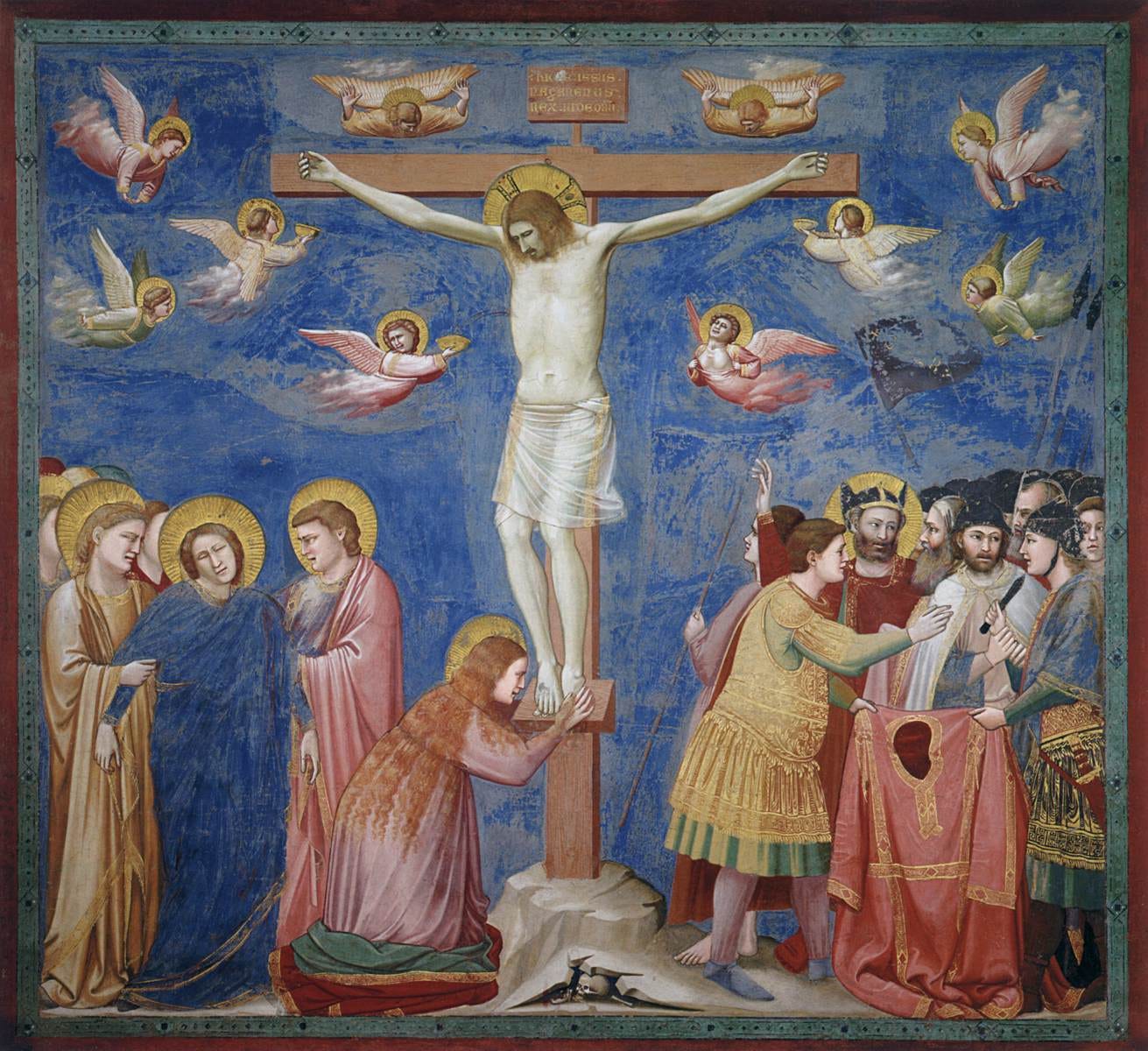
Okay, but how is that any different than Christians?
Aren’t Christians then like Nazis?
“Your God himself is a martyr. You hang a cross around your neck. Your most Holy Days (Good Friday to Easter) celebrate his death and resurrection.
Eleven of your twelve Apostles were crucified, including the founder of your Catholic Church. All of your early saints and heroes were martyrs, being fed to the lions. You all are always on and on about the persecution of Christ’s followers.
If anyone glorifies martyrdom and victimhood, surely it must be Christians, no?”
This is what the devil is probably whispering in your ear right now.
So let me quote from the Book of Luke, 23:33-37.
When they came to the place called the Skull, they crucified him and the criminals there, one on his right, the other on his left. Then Jesus said, “Father, forgive them, they know not what they do.” They divided his garments by casting lots. The people stood by and watched; the rulers, meanwhile, sneered at him and said, “He saved others, let him save himself if he is the chosen one, the Messiah of God.” Even the soldiers jeered at him. As they approached to offer him wine they called out, “If you are King of the Jews, save yourself.”
What does Jesus do when he is being crucified.
When he is being mocked.
When his stuff is being stolen from him.
He asks God to forgive them. They don’t know what they’re doing.
Forgiveness.
Matthew 18:21-35. I’m quoting at length because this is one of my favorite passages in the entire Bible.
Then Peter approaching asked him, “Lord, if my brother sins against me, how often must I forgive him? As many as seven times?”
Jesus answered, “I say to you, not seven times but seventy-seven times.
That is why the kingdom of heaven may be likened to a king who decided to settle accounts with his servants. When he began the accounting, a debtor was brought before him who owed him a huge amount. Since he had no way of paying it back, his master ordered him to be sold, along with his wife, his children, and all his property, in payment of the debt.
At that, the servant fell down, did him homage, and said, ‘Be patient with me, and I will pay you back in full.’ Moved with compassion the master of that servant let him go and forgave him the loan.
When that servant had left, he found one of his fellow servants who owed him a much smaller amount.
He seized him and started to choke him, demanding, ‘Pay back what you owe.’ Falling to his knees, his fellow servant begged him, ‘Be patient with me, and I will pay you back.’ But he refused. Instead, he had him put in prison until he paid back the debt.
Now when his fellow servants saw what had happened, they were deeply disturbed, and went to their master and reported the whole affair.
His master summoned him and said to him, ‘You wicked servant! I forgave you your entire debt because you begged me to. Should you not have had pity on your fellow servant, as I had pity on you?’ Then in anger his master handed him over to the torturers until he should pay back the whole debt.
So will my heavenly Father do to you, unless each of you forgives his brother from his heart.”
And then if you will allow me one more:
Matthew 5:43-48
“You have heard that it was said, ‘You shall love your neighbor and hate your enemy.’ But I say to you, love your enemies, and pray for those who persecute you, that you may be children of your heavenly Father, for he makes his sun rise on the bad and the good, and causes rain to fall on the just and the unjust. For if you love those who love you, what recompense will you have? Do not the tax collectors do the same? And if you greet your brothers only, what is unusual about that? Do not the pagans do the same? So be perfect, just as your heavenly Father is perfect.
There are a few concepts I want to chew on here.
The first one is the idea of comparing the actions of the Christians to the Pagans. Most other religions take the natural course of humanity, the natural instincts of murder, of protecting your own group, of castes and slavery and war and murder — and enshrine those base instincts in moral law. Christianity is different. It asks you to be better than your base instincts. It asks you to do better than the pagans. God asks you to be better than you are.
But that’s more of a diversion.
The point that I really want to make is this.
If the Devil is the Accuser. And if the Devil works by pointing at hypocrisy. At pointing at the sins of others and using that to justify your own.
Then the only way to defeat the Devil is by forgiving those who sin against you.
It’s often said that you don’t forgive others for their sake, but for your own. I think this is where that insight comes from.
Your own sins can only really be justified by the evil acts (or the hypocrisy) of others.
Without that ammunition, it becomes more difficult — maybe impossible — for the Devil to work on you.
You are going to be put upon. You’re going to be persecuted. You’re going to be mistreated in your life.
Ask yourself, what type of martyr do you want to be?
Do you want to be the type of martyr that the Devil uses, that he inspires to inflict pain on others — justified by the pain that was inflicted upon you?
Or do you want to be the type of martyr that Jesus wants you to be? The type that gets nailed to a cross, and while that is happening to you, you say, “forgive them, Father, for they do not know what they do.”
Before moving on to the next section, I want to end this by with The Lord’s Prayer. This is the only prayer that Jesus gives us to do. Here it is:
Our Father,
who art in Heaven,
hallowed be Thy name.
Thy kingdom come,
They will be done,
on earth as it is in Heaven.
Give us this day our daily bread,
and forgive us our trespasses,
as we forgive those who trespass against us.
And lead us not into temptation,
but deliver us from evil.
Amen.
In your personal life, the Devil will constantly use accusations to try to get you to commit sin.
The only way to resist him is by forgiving those that persecute you. .
But what do we do on a societal level?
Reform, Don’t Rebel

My drafts folder for this Substack has probably ten times as many articles as have been published — and likely, we will stay at that rate as I keep publishing more.
I have a piece that I was working on yesterday about Protestantism, but I decided to put it aside for a lot of reasons, but mainly that I don’t want to spend my time fighting against other Christians right now, when there is a whole other fight going on against the religion of secular progressivism.
That being said, I do think that most of our problems in the modern world began in 1517, when Martin Luther nailed the 95 Theses on the Church wall in Wittenberg.
As the Devil says in Milton, “I’d rather reign in hell than serve in heaven.”
Were there legitimate criticisms of the Church back then?
100%.
There are a lot of legitimate criticisms of the Church today.
Let me just name some of the biggest that I personally have:
No more calling for Crusades and the reconquest of Constantinople
Female deacons (explicitly prohibited in St. Paul’s letter to Timothy)
Prohibition on Priest Marriage (again prohibited in St. Paul’s letters)
The wealth of the Church
The fact that the Church now says that you can enter into heaven even if you aren’t a Catholic, and even if you aren’t a Christian
I can go on.
And it can be easy when you are within the church to see these issues as the source of all your problems.
And if you would just get unmoored from the Pope, then you can resolve them.
And, yes, you can.
But what you don’t consider is how many other issues come up.
Because once we believe the Bible is a Choose Your Own Adventure game, then we end up with:

A female Archbishop of Canterbury.
Or

The Jonestown Massacre. People who came to Jim Jones because they thought he was a Pentecostal Preacher, but instead, he was a Communist in disguise.
There are a lot of other, more charged examples that I can bring up, but instead…

This is the same lesson that they learned during the French Revolution.
They thought that they couldn’t get worse than the King, so why not overthrow him. Instead, they got Robespierre, the reign of terror, and then a century of Revolution and war.
The same fate befell the Communists in Russia:

All they wanted was “Peace, Land and Bread” —
Instead, they got “War, Enslavement and Starvation.”
The Devil will always use accusations to convince us to overthrow whoever is in charge and cast our world into tumult. Because it is in tumult that the Devil reigns supreme. He loves chaos more than anything else.
So… what do we do?
What about the problems that are afflicting people?
I thought that you were very skeptical of immigration? Isn’t that accusatory?
It may be.
I don’t really have a good answer.
I’m as much of a hypocrite as anyone else. Probably more so.
What I think about when it comes to Leftism, Secular Progressivism, Socialism… is that it is a function of how the Devil operates.
Due to Christianity, people in the West have come to believe that the rich have an opportunity to help the poor. This isn’t a belief that they have in other religions. Just ask a Hindu what they think about the poor.
But, because we are all human, we are imperfect, fallen. And, the West and the Church hasn’t helped the poor in both our countries and in other parts of the world as much as Christ would probably expect of us.
That is certain.
So, we ended up in this half space. Where we listened to Christ enough to know that what we were doing was wrong (being rich while others are poor), but not enough to actually do anything about it.
And socialism is the Devil calling out that hypocrisy.
It wouldn’t be possible without that accusation.
But, as we’ve seen, the end result isn’t to help the poor. Communist Revolutions have never resulted in the enrichment of poor people. Instead, the always ended up in the impoverishment of everyone else.
And the Immigration Revolution isn’t going to be any different. Bringing millions of Africans and Middle Easterners to Europe isn’t going to make those people any better off; instead, it’s just going to make Europe poorer. Then Europe is going to collapse, and everyone will be worse off.
This is what the Devil wants. The Devil wants destruction.
And, so, I think there are two ways to have this conversation.
The first is to do it in a way that gives into the Devil. To be filled with anger, with hatred — with rage at all the violence, and rape, and theft that has been perpetrated against the native populations of Europe and the Anglosphere over the past two decades. When you read about the rape gangs in England, it makes you want to… I don’t even want to finish that sentence.
That is obviously wrong. Even though, as I will regularly admit, I engage in it just as much, if not more, than anyone.
But this is where the Devil is tricky. Because, since there is a wrong way to object to immigration, the Devil makes you think that the only way to object to immigration is wrong. That the only objection is one done out of rage.
But that isn’t true.
Instead, you can object to what the Left is doing through Love.
Love of your country..
Love of Europe.
Love of West Civilization.
This is one of the reasons, by the way, I make it a point to use so many Renaissance paintings in my pieces now. It’s a lot easier to use AI generated slop. But I want to, when it’s possible, to highlight the beauty of Western Civilization.

And through that love, push back on the accusations of the Devil.
Name what he is doing.
And do not allow yourself to be demoralized and destroyed by him.
One last point that I want to make. One thing I’ve noticed from watching and listening to a lot of Leftists talk about immigration, birth rates, etc. is that there seems to be an underlying hatred of Western Civilization. Of Christianity. This has been inculcated through Marxist propaganda that has been widespread throughout our culture for decades now. Almost a century.
The best response to this is not to fight them with hate.
Not to view yourself as a martyr that must be avenged.
But to forgive them for their sins, and through that forgiveness, forgive yourself.
And then, do not allow those people to use that self-hatred to destroy what we love so much.
The only way through this is forgiveness and love.
Only then does the accuser have nothing to say anymore.
Hey, I hope you appreciated this piece. I don’t think you noticed, but I took out all the “subscribe here!” and “pay for a subscription!” buttons from these articles. I don’t know. It didn’t seem worthwhile. No one was becoming a paid sub. And I found myself not writing that much because I was trying to write pieces that I felt could convert the most to free subscribers, then paid subscribers.
And… it wasn’t even that successful at doing that.
So, instead, I decided I’m just going to write about what I’m interested in. If no one reads this, I don’t really give a shit anymore. You weren’t paying me anyway. I wasn’t making any money from this. So why not just write about what I want. And what I want to write about, at least nowadays, is my faith.
Anyway, that was a very diplomatic lead in to my next statement, which is: if you like what I’m writing, please become a paid subscriber and support the page. I would really appreciate it.
And if you want to support through other means, you can donate here.